A reflection on Buddha, Rousseau, and the two causes of suffering

Youâve heard the Buddhaâs prescription for the cause of suffering: craving.
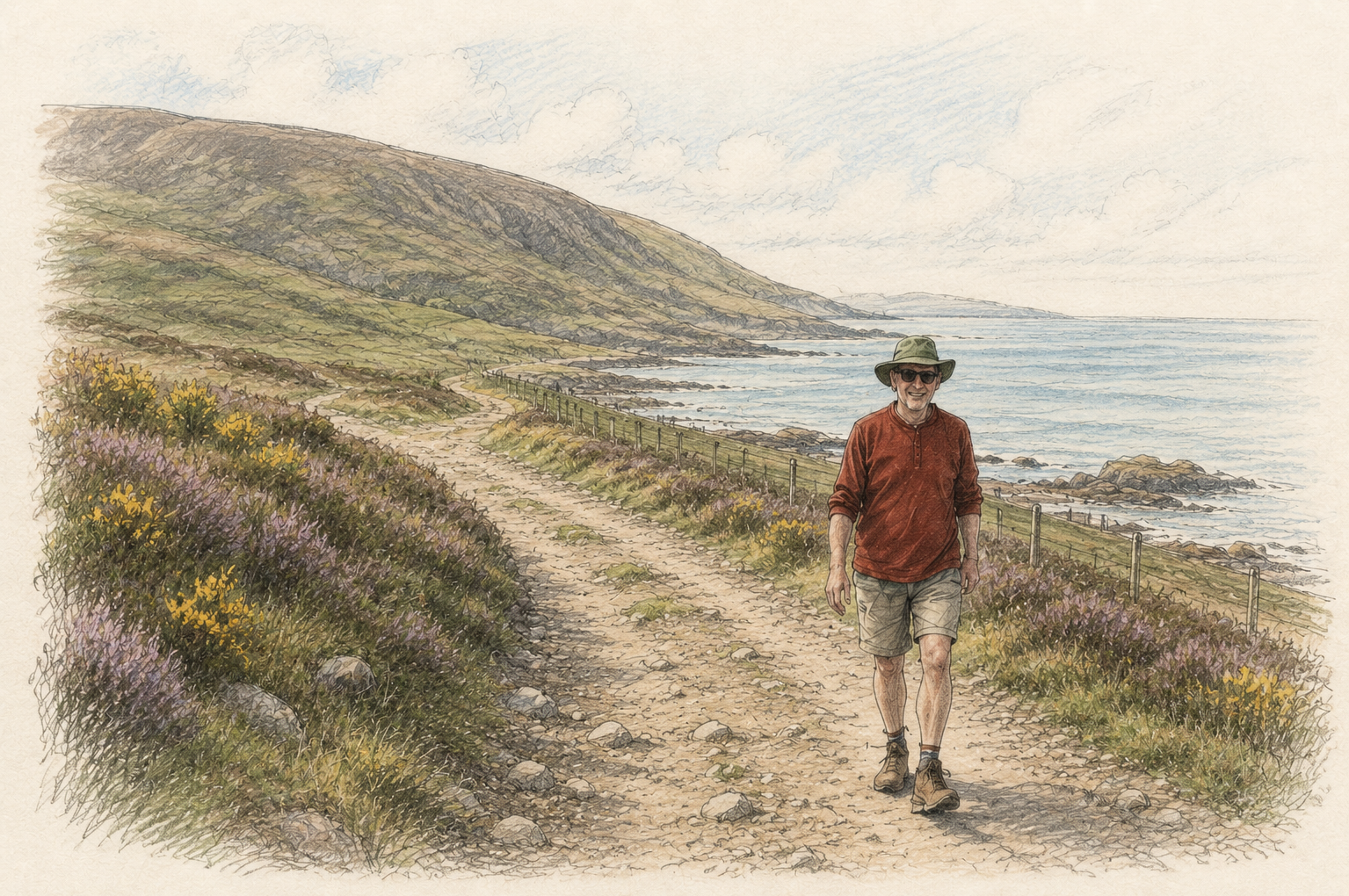
There is a classic Buddhist story that advises you cannot carpet the whole world, but you can carpet your feet â in other words, wear sandals.
âWhere would I possibly find enough leather
To cover the surface of the earth?
But with leather soles beneath my feet,
It is as though the whole world has been covered.â
Likewise, it is not possible for me
To restrain the external course of things;
But should I restrain this mind of mine,
What need is there to restrain all else?â
~ From the BodhicaryÄvatÄra, Chapter 5 (âGuarding Introspectionâ), verses 13â14, translated by Vesna Wallace and B. Alan Wallace (1997).
The advice is sensible and deeply consistent with the Buddhaâs teaching. I cannot remove every object of inconvenience or temptation, but I can work with myself.
Reading a beautiful and profound book, Animals are People by Peter Morville, I came across this passage about Jean-Jacques Rousseau, an Enlightenment philosopher who believed humans are naturally good but are corrupted by society and inequality.
âThatâs right, Jo. He sees inequality as the root cause of misery. He says that while âthere is hardly any inequality in the state of nature,â human society shows âthe violence of the powerful and the oppression of the weak.â Itâs an echo of the aboriginal belief that the most destructive idea in existence is âI am greater than you; you are less than me.â Itâs a slippery slope. The belief in supremacy over animals primes people for supremacy over their fellow humans.â
Rousseau sees inequality as the root cause of suffering. The Buddha and ĹÄntideva locate the root in the mind. Who is right? Both are. One is the internal approach; the other is the external. Each has its strengths and each its limits.
The Buddha begins with the mind because every encounter with the world is filtered through attention, emotion, and habit. Even in a perfectly just society, an untrained mind becomes entangled in craving, aversion, and confusion. ĹÄntidevaâs sandals metaphor is a reminder that we carry the world inside us. Suffering arises the moment we insist that reality conform to our preferences.
Rousseau begins with society because the world shapes us long before we know we are being shaped. Inequality distorts relationships, incentives, and self-worth. It teaches hierarchy and violence long before a child has the capacity to think critically about them. The injustices we internalize become the very cravings and fears the Buddha warns us about. To ignore this is to pretend the mind grows in a vacuum.
So the two views are not opposites but complements. Inner discipline protects us from being dominated by our reactions; outer justice protects us from being placed in conditions that breed those reactions. Inner work without outer change can drift into quietism. Outer change without inner work can repeat the same old patterns under new banners. A mature response to suffering requires both: clarity of mind and clarity of society, sandals and a path worth walking.


